
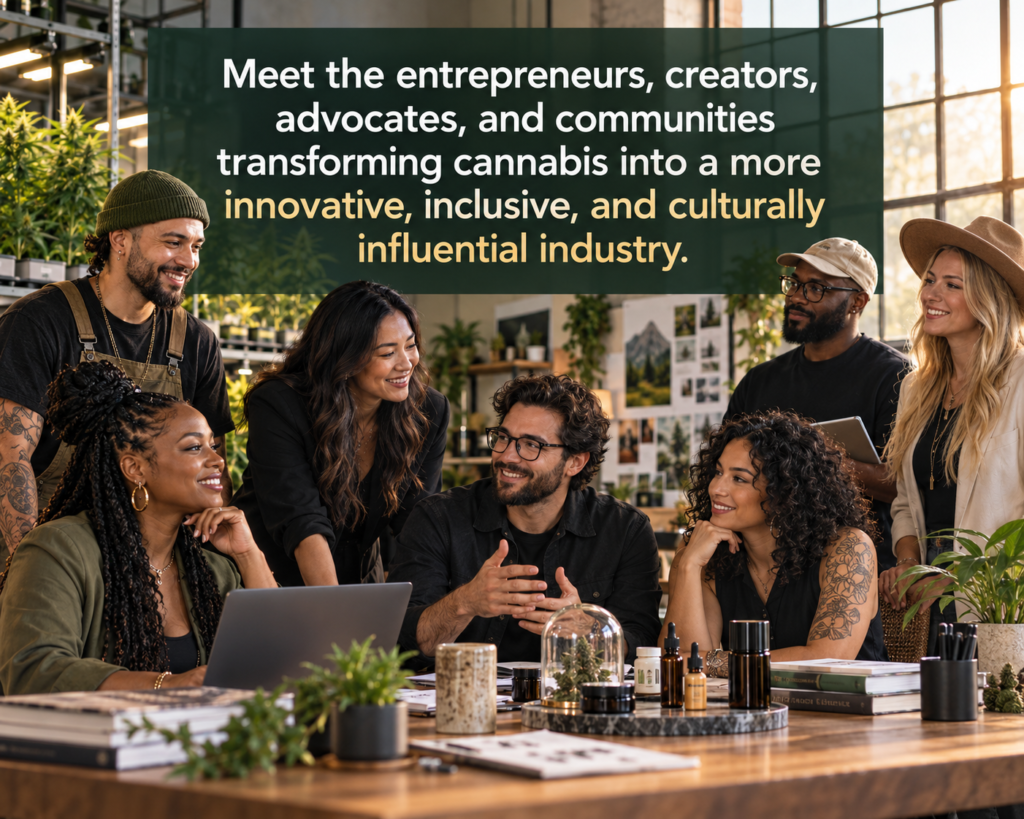
Meet the entrepreneurs, creators, advocates, and communities transforming cannabis into a more innovative, inclusive, and culturally influential industry.
The future of cannabis is not being defined by a single product, company, or trend. It is being shaped by people—visionary entrepreneurs, independent creators, community advocates, wellness professionals, cultivators, educators, and consumers who are changing how cannabis is produced, presented, understood, and experienced.
As legalization and social acceptance continue to evolve, cannabis is moving beyond outdated stereotypes. A new generation is building an industry centered on innovation, responsible consumption, cultural authenticity, wellness, economic opportunity, and community impact.

Entrepreneurs Building Beyond the Dispensary
Cannabis entrepreneurship now extends far beyond cultivation and retail. Business owners are developing infused beverages, wellness products, accessories, technology platforms, hospitality experiences, educational programs, media companies, and professional services.
Many founders are entering the industry after recognizing needs that larger companies have overlooked. Some are creating products for consumers who prefer discreet, low-dose, or smoke-free options. Others are building services that help cannabis businesses manage branding, compliance, marketing, packaging, logistics, and customer education.
These entrepreneurs are helping cannabis become a sophisticated consumer marketplace. They understand that today’s customers want more than potency. Consumers are increasingly interested in quality, transparency, convenience, consistency, and brands that reflect their lifestyles and values.
However, building a cannabis business remains challenging. Entrepreneurs must navigate complex regulations, limited access to banking, high operating costs, shifting public policies, and restrictions on advertising. Independent and minority-owned companies may also struggle to obtain the capital and industry connections needed to compete.
Despite those barriers, determined founders continue to create new pathways into the market.
Creators Are Redefining Cannabis Culture
Artists, designers, chefs, musicians, filmmakers, photographers, podcasters, and digital storytellers are giving modern cannabis culture a new identity.
Their work is replacing one-dimensional imagery with more thoughtful stories about creativity, wellness, entrepreneurship, food, fashion, social life, and personal experience. Cannabis is increasingly appearing in sophisticated editorial content, culinary events, art exhibitions, branded experiences, and lifestyle conversations.
Content creators also play an important educational role. Through interviews, reviews, documentaries, podcasts, and social media, they help audiences understand products, terminology, responsible use, and changing laws.
Authenticity will remain essential as cannabis becomes more commercialized. Creators who understand the history and cultural significance of the plant can help brands communicate without exploiting the communities that helped build cannabis culture long before legalization.
Advocates Are Keeping Equity in the Conversation
The cannabis industry cannot discuss its future without acknowledging its past.
For decades, cannabis prohibition disproportionately affected certain communities through arrests, incarceration, lost employment, and other long-term consequences. Today, advocates are working to ensure that legalization includes opportunities for people and neighborhoods harmed by those policies.
Their priorities often include record-clearing initiatives, fair licensing systems, access to business capital, workforce development, community reinvestment, patient protections, and responsible criminal-justice reform.
Advocates are also calling attention to the difference between being legally permitted to enter the industry and having the resources necessary to succeed. A license alone does not provide funding, real estate, professional guidance, retail access, or long-term operational support.
Meaningful equity requires more than promises. It requires measurable investment, accessible programs, transparent policies, and continued accountability.
